


Moët & Chandon plants 80km of hedges: “Biodiversity is a catalyst for collective energy”


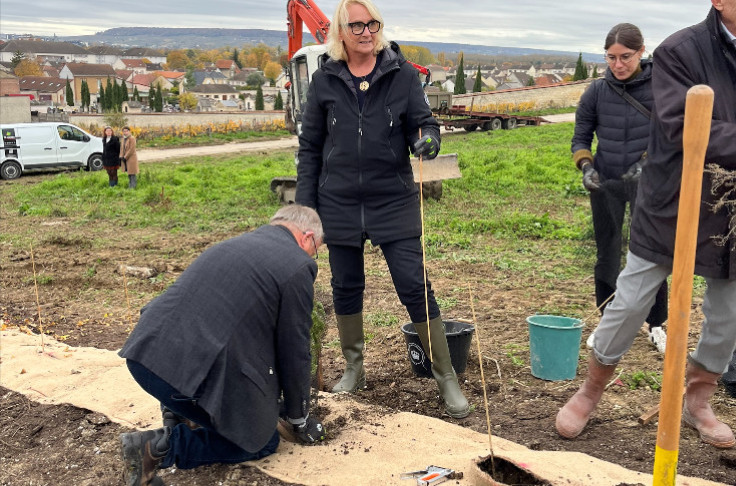
ith a shrub and a shovel in hand, executives and staff from Moët & Chandon, the media and elected representatives planted 500 metres of hedges in Aÿ on November 6. “The hedge replaces a concrete gutter that took water to a residential area and was not very pretty”, explains Reynald Loiseau, head of viticulture in Aÿ for Moët & Chandon (LVMH group). “This way the water will be absorbed”.
The collective planting of the local species chosen for the hedge was the final phase of the annual Natura Nostra event organised by Moët & Chandon. Launched in 2021, the programme aims to restore biodiversity in Champagne, not only in Moët & Chandon vineyards but also in those of their partner vineyards. Moët & Chandon president Sybille Scherer is satisfied with the progress made so far by the programme, stating: “By the end of 2025, 80 km of hedges will have been planted, including 25 km in 2025 alone”. The aim is to reach 100 km by 2027.
“We have seen that biodiversity is a catalyst for collective energy”, adds Marc Brévot, director of the Robert-Jean De Vogüé Moët Hennessy research centre in Oiry. “We still have some way to go in understanding biodiversity’s contribution from a scientific standpoint, but we’re making progress. Moët Hennessy is involved, for example, in the GetUp project where we study out in the field how vine microbiota can naturally combat downy mildew”.
Frédéric Gallois, Moët & Chandon’s vineyard and sourcing director believes that “we need to take action across the entire wine region. We work with 2,400 growers farming 4,000 hectares. We are collaborating with them to promote biodiversity”.




 Facebook
 Twitter
 LinkedIn