


Champagne harvests its first Voltis grapes


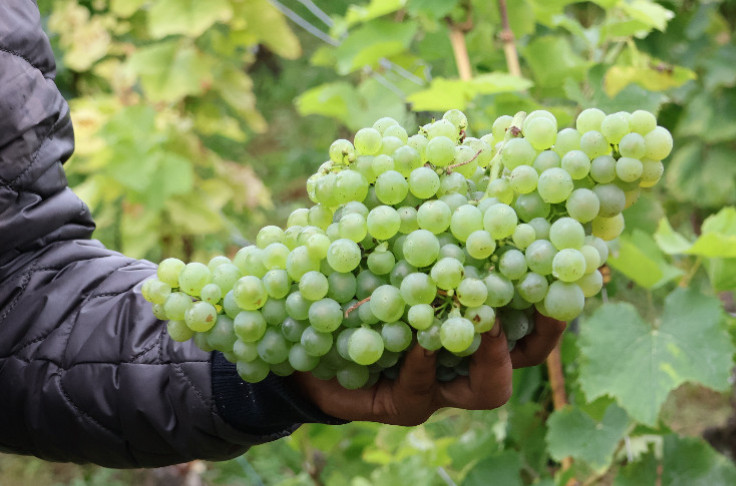
hampagne’s 8.9 hectares of Voltis, the white grape variety resistant to downy and powdery mildew, were harvested for the first time this year. The variety is one of a group of cultivars designed to help French vineyards adapt to climate change (VIFA) and is mainly planted in buffer zones near residential areas or locations that are sensitive to powdery mildew. “We are learning to get to know it”, explains Héloïse Mahé, head of the grape and wine quality department with Comité Champagne. “It follows the same ripening pattern as the other varieties when we were expecting to harvest it a week later”.
What surprised the industry most, though, was the weight of the clusters, some of which – widely shared on social media – were in excess of 600 grams. “Compared with Chardonnay, there are half as many clusters per square metre with Voltis and the clusters are twice the size”, stresses Mahé. “This year, due to the sunshine, average alcohol content totalled 9.8%, whereas the variety normally ranges from 9 to 9.5%”. For the 600kg of Voltis fermented by Comité Champagne as part of various trials, the average alcohol content was 9.95%, total acidity 6.4g/litre and pH 3.10.
Comité Champagne is experimenting with small-batch winemaking on the six most widely used strains in the region. A network of 80 industry members growing the new cultivar was established to share information about vineyard management techniques. Among them, a dozen were asked to specify their technical choices in a small booklet. Comité Champagne will bring them together in January to discuss their winemaking feedback – Voltis has a tendency to add colour to the juice and develop bitterness on the finish. The decision on whether or not to include Voltis in AOP Champagne production specifications will be made after the 2032 harvest.





 Facebook
 Twitter
 LinkedIn