


This particular grape variety is not prone to botrytis cinerea


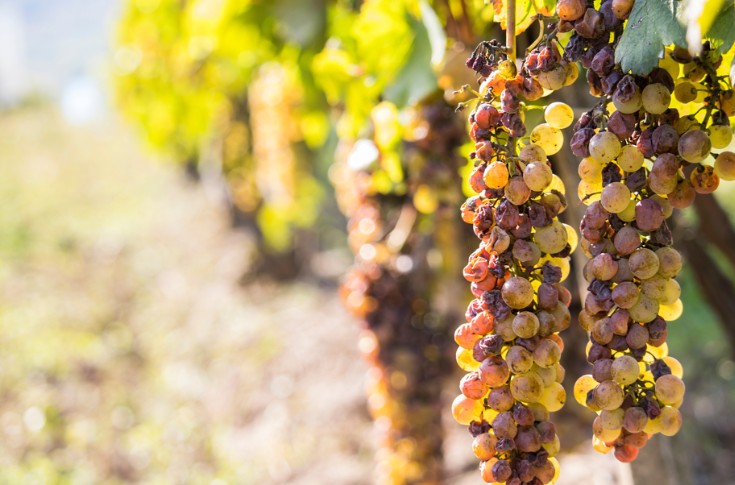
temming from the hybridisation of Folle Blanche and Noah which is valued for its flavour, the Baco Blanc variety shows very good resistance to Botrytis cinerea due to the unusual chemical composition of its grapes.
“Baco is widely planted in the vineyards of Armagnac and is very rich in eugenol, a molecule that is renowned for being imparted to wine and spirits by oak wood. It also proves to be an excellent antifungal agent”, claims a research team in Bordeaux.
Their studies using petri dishes have shown two different effects for eugenol – a direct effect when the molecule is in contact with the fungus, and an effect linked to its vapour. “The fumigation effect could be very interesting in the event of post-harvest treatments for table grapes”, say the researchers.
Applied in concentrations where they have found the molecule in the skins of Baco grapes, eugenol inhibited approximately 10% of the growth of botrytis cinerea isolates.
Observations on 6 Baco clones in an experimental vineyard in the Landes region of France have revealed that not all vines produce the same amount of eugenol. Some clones are even more resistant to botrytis than the n° 1086, the only clone currently authorised in the Armagnac region.
The researchers have also noticed that the eugenol concentration in the skins is negatively correlated with technological ripeness (sugar/acid ratio).





 Facebook
 Twitter
 LinkedIn